

Read below a collection of relevant independent scientific studies from around the world, so you can learn more about blue light, its impact on your day, your night – your life – your current and future retinal health.
You will understand here how our glasses help you give your best.
The effectiveness of our lenses has been scientifically tested in the laboratory, under different lighting and exposure conditions, including prolonged and intense exposure.
 In 2020, the University of Washington and Indiana University published a study in the Journal of Applied Psychology which was subsequently published in the Harvard Business Review.
Guarana, C. L., Barnes, C. M., & Ong, W. J. (2021). The effects of blue-light filtration on sleep and work outcomes. Journal of Applied Psychology, 106(5), 784–796.
Results: workers who wore blue light blocking glasses in the evening before bedtime significantly improved the quality and quantity of their sleep, as well as their work efficiency the next day. All of this by improving their chronobiology.
In 2020, the University of Washington and Indiana University published a study in the Journal of Applied Psychology which was subsequently published in the Harvard Business Review.
Guarana, C. L., Barnes, C. M., & Ong, W. J. (2021). The effects of blue-light filtration on sleep and work outcomes. Journal of Applied Psychology, 106(5), 784–796.
Results: workers who wore blue light blocking glasses in the evening before bedtime significantly improved the quality and quantity of their sleep, as well as their work efficiency the next day. All of this by improving their chronobiology.
Read the complete study here.
 In 2016, participants wore blue light blocking glasses for 4 weeks. Measurements were collected through questionnaires and using sleep monitoring devices (polygraphy). Result? A significant improvement in sleep. This improvement was both self-reported and objectively measured.
 Participants in this randomized crossover trial (4-week washout), suffering from insomnia, wore blue light blocking glasses two hours before bedtime, 7 consecutive nights.
Ambulatory sleep measurements, both subjective and objective (wrist actigraphy) focused on quality of life, sleep, and stress.
Participants in this randomized crossover trial (4-week washout), suffering from insomnia, wore blue light blocking glasses two hours before bedtime, 7 consecutive nights.
Ambulatory sleep measurements, both subjective and objective (wrist actigraphy) focused on quality of life, sleep, and stress.
 “We conclude that the use of [blue light blocking] glasses in male adolescents when sitting in front of a screen in the evening can attenuate melatonin suppression and alerting effects before sleep. Blue light blocking glasses therefore have the potential to acutely counteract the negative effects that modern lighting imposes in the evening on circadian physiology.”
Read this Swiss study focusing on the impact of blue light on adolescents.
“We conclude that the use of [blue light blocking] glasses in male adolescents when sitting in front of a screen in the evening can attenuate melatonin suppression and alerting effects before sleep. Blue light blocking glasses therefore have the potential to acutely counteract the negative effects that modern lighting imposes in the evening on circadian physiology.”
Read this Swiss study focusing on the impact of blue light on adolescents.
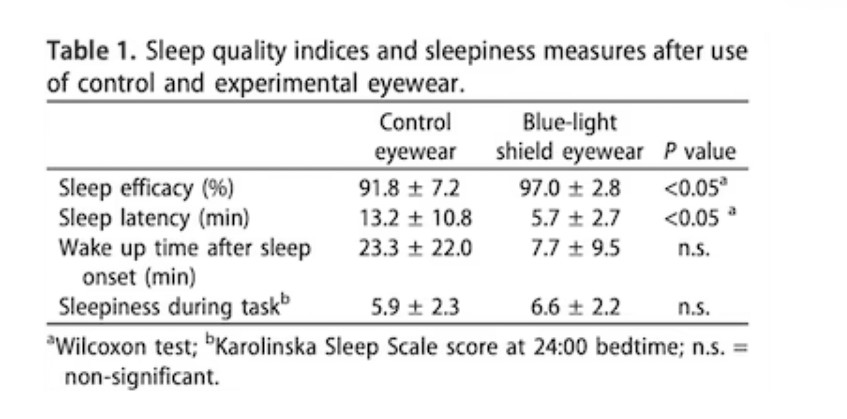
 Participants in this Japanese study wore blue light blocking glasses. The results are as follows:
 “Our results show that, according to certain sleep indices, sleep quality is significantly better in healthy adults after using screen glasses that protect them from blue light while using portable devices at night.”
Read the complete study on the protective effects of blue light blocking glasses against screens. Masahiko Ayaki, Atsuhiko Hattori, Yusuke Maruyama, Masaki Nakano, Michitaka Yoshimura, Momoko Kitazawa, Kazuno Negishi & Kazuo Tsubota (2016) Protective effect of blue-light shield eyewear for adults against light pollution from self-luminous devices used at night, Chronobiology International, 33:1, 134-139, DOI: 10.3109/07420528.2015.1119158
“Our results show that, according to certain sleep indices, sleep quality is significantly better in healthy adults after using screen glasses that protect them from blue light while using portable devices at night.”
Read the complete study on the protective effects of blue light blocking glasses against screens. Masahiko Ayaki, Atsuhiko Hattori, Yusuke Maruyama, Masaki Nakano, Michitaka Yoshimura, Momoko Kitazawa, Kazuno Negishi & Kazuo Tsubota (2016) Protective effect of blue-light shield eyewear for adults against light pollution from self-luminous devices used at night, Chronobiology International, 33:1, 134-139, DOI: 10.3109/07420528.2015.1119158
 “Our data show that, regardless of gender, blue light blocking glasses can prevent the inhibition of melatonin production caused by a light pulse (one hour at 1300 lx).”
Read the study that already showed this in 2006.
“Our data show that, regardless of gender, blue light blocking glasses can prevent the inhibition of melatonin production caused by a light pulse (one hour at 1300 lx).”
Read the study that already showed this in 2006.
 These studies are only 1/8th of the tip of the iceberg.
Deepen your knowledge about the scourge that encompasses the twenty-first century, fatigues the eyes and disrupts your circadian rhythm. To do this, you can download a list giving you access to 50 study summaries and scientific articles on the subject, as well as the ebook bringing together more than 750 studies indicating the impact of artificial blue light on our lives as natural beings.
These studies are only 1/8th of the tip of the iceberg.
Deepen your knowledge about the scourge that encompasses the twenty-first century, fatigues the eyes and disrupts your circadian rhythm. To do this, you can download a list giving you access to 50 study summaries and scientific articles on the subject, as well as the ebook bringing together more than 750 studies indicating the impact of artificial blue light on our lives as natural beings.
Study 1: Journal of Applied Psychology & Harvard Business Review
 In 2020, the University of Washington and Indiana University published a study in the Journal of Applied Psychology which was subsequently published in the Harvard Business Review.
Guarana, C. L., Barnes, C. M., & Ong, W. J. (2021). The effects of blue-light filtration on sleep and work outcomes. Journal of Applied Psychology, 106(5), 784–796.
Results: workers who wore blue light blocking glasses in the evening before bedtime significantly improved the quality and quantity of their sleep, as well as their work efficiency the next day. All of this by improving their chronobiology.
In 2020, the University of Washington and Indiana University published a study in the Journal of Applied Psychology which was subsequently published in the Harvard Business Review.
Guarana, C. L., Barnes, C. M., & Ong, W. J. (2021). The effects of blue-light filtration on sleep and work outcomes. Journal of Applied Psychology, 106(5), 784–796.
Results: workers who wore blue light blocking glasses in the evening before bedtime significantly improved the quality and quantity of their sleep, as well as their work efficiency the next day. All of this by improving their chronobiology.
| Clinical trial 1: participants… | Clinical trial 2: participants… |
|---|---|
| • slept 6% longer, | • slept 5% longer, |
| • improved their sleep quality by 11%, | • improved their sleep quality by 14%, |
| • improved their performance in executing assigned tasks by 9%, | • improved their performance in executing assigned tasks by 7%, |
| • increased their work engagement by 8.25%, | • increased their work engagement by 8.5%, |
| • increased their helping capabilities by 18%, | • increased their helping capabilities by 17%, |
| • decreased their negative work behavior by 12%. | • decreased their negative work behavior by 12%. |
Study 2: Sleepscore Labs
 In 2016, participants wore blue light blocking glasses for 4 weeks. Measurements were collected through questionnaires and using sleep monitoring devices (polygraphy). Result? A significant improvement in sleep. This improvement was both self-reported and objectively measured.
- 73% of participants reported that the glasses improved their overall sleep.
- 11 minute decrease in time to fall asleep.
- 24 minute decrease in time spent awake during the night.
- 37% increase in feeling rested in the morning.
- 14% increase in time spent in deep sleep.
- 14% increase in average daily sleep quality.
Study 3 (randomized trial): blocking blue light to stop insomnia
 Participants in this randomized crossover trial (4-week washout), suffering from insomnia, wore blue light blocking glasses two hours before bedtime, 7 consecutive nights.
Ambulatory sleep measurements, both subjective and objective (wrist actigraphy) focused on quality of life, sleep, and stress.
Participants in this randomized crossover trial (4-week washout), suffering from insomnia, wore blue light blocking glasses two hours before bedtime, 7 consecutive nights.
Ambulatory sleep measurements, both subjective and objective (wrist actigraphy) focused on quality of life, sleep, and stress.
- Their insomnia was reduced (Pittsburgh Insomnia Rating Scale – PIRS)
- Their quality of life, stress and sleep parameters were improved,
- Their reported sleep duration was improved.
- The quality and depth of their sleep were increased.
Study 4: +50% melatonin (salivary measurement)
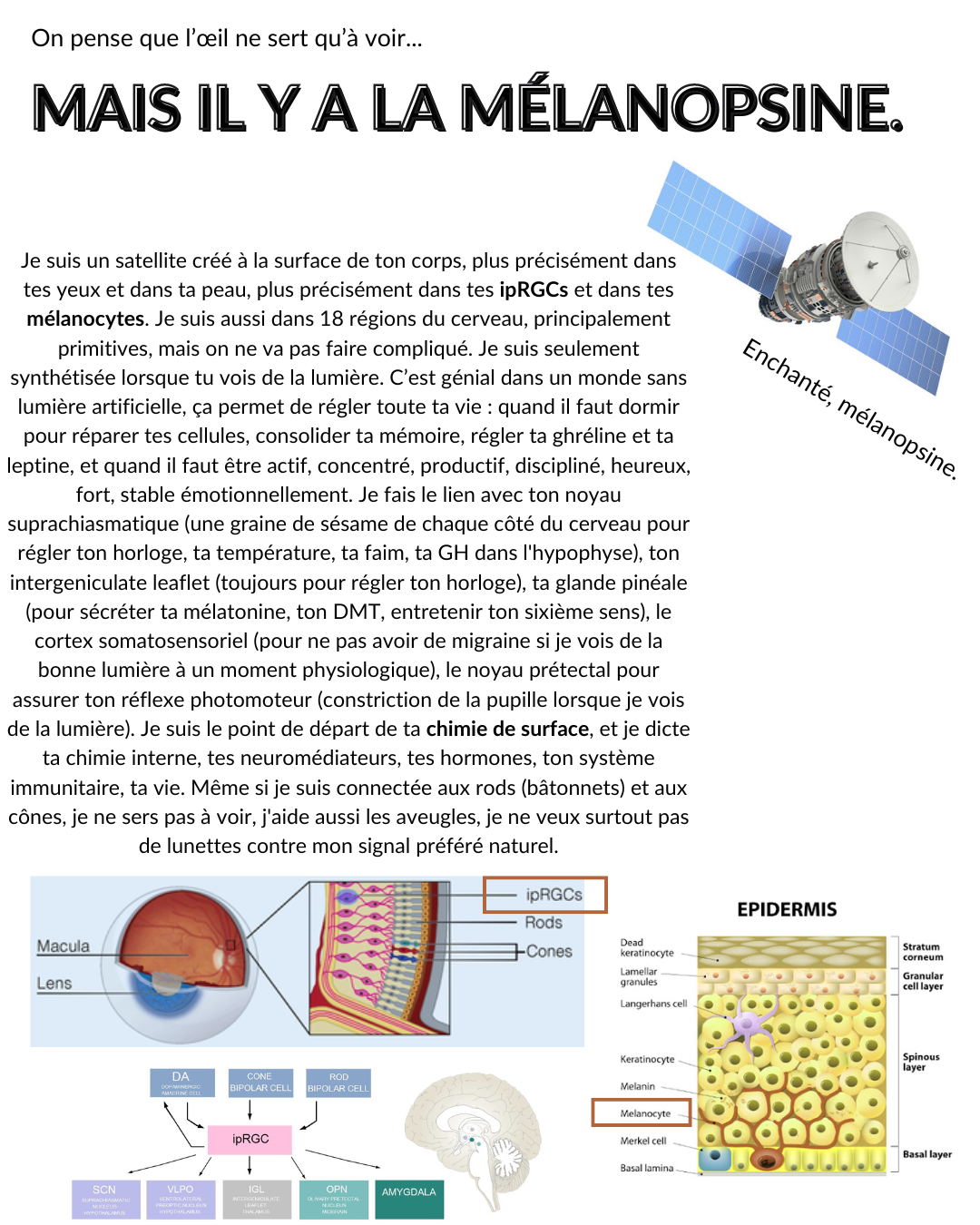
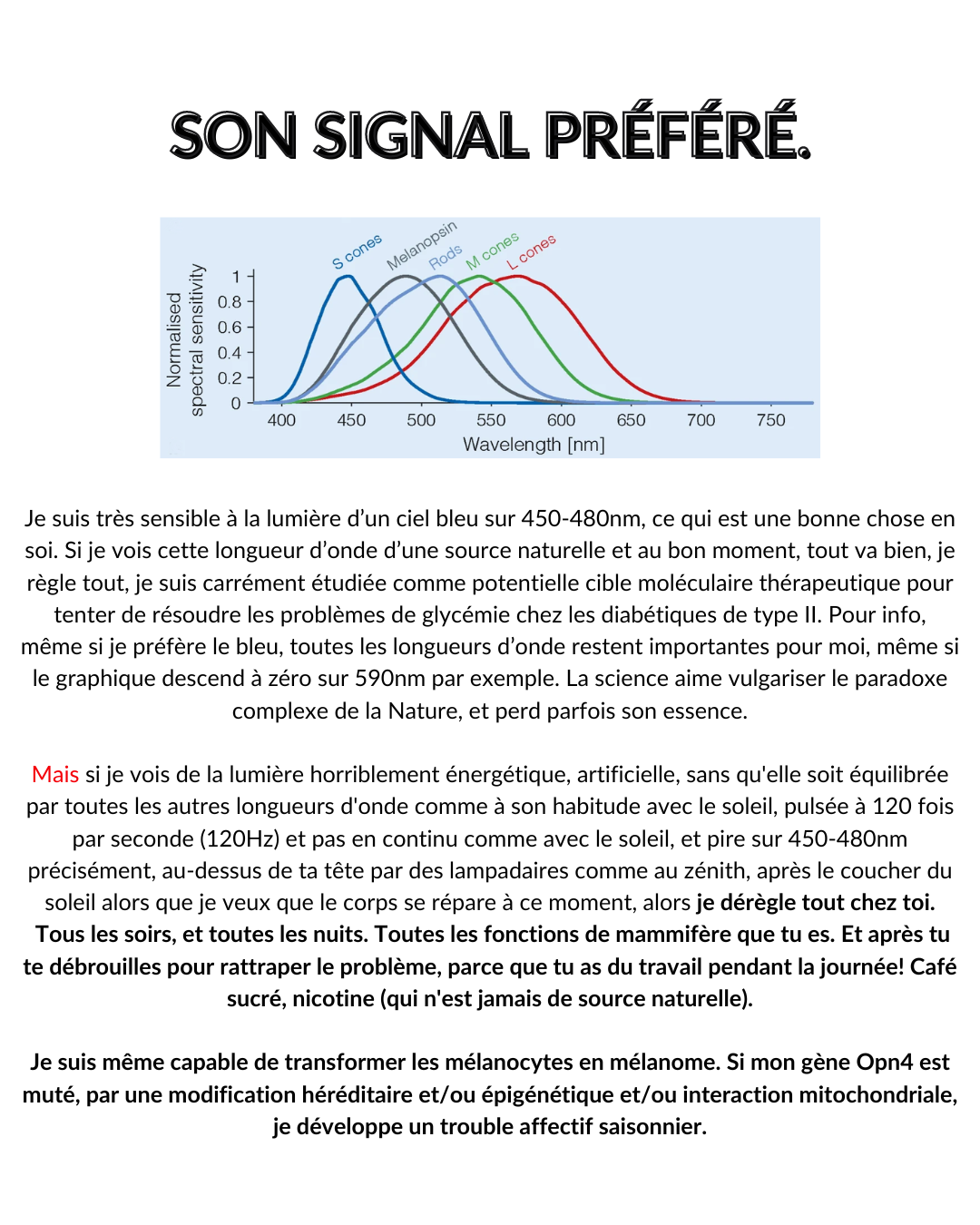
You will soon read through our blog articles and our ebook about the role and pathophysiology of melatonin, and particularly the involvement of intrinsically photosensitive retinal ganglion cells. Here is the study on retinal ganglion cells, conducted by Ophthalmic and physiological optics. Lisa A. Ostrin, Kaleb S. Abbott, Hope M. Queener, Ophthalmic and physiological optics, Volume 37, issue 4, July 2017, pages 440-450. The results of this study are:- Wearing blue light blocking glasses:
- increased nighttime melatonin levels by 9 pg/mL: +50%.16 pg/mL ☞ 25.5 pg/mL
- significantly increased sleep duration (+ 24 minutes): 408 minutes ☞ 432 minutes.
- significantly increased reported sleep quality: PSQI score: 5.6 ☞ 3.0.
- Exposure to blue light without protection causes:
- an alteration in pupillary response mediated by intrinsically photosensitive retinal ganglion cells.
- a phase shift in circadian rhythm.
Study 5: Turning on a 9500 lux light at night for 15 seconds shifts your melatonin secretion by 30 minutes.
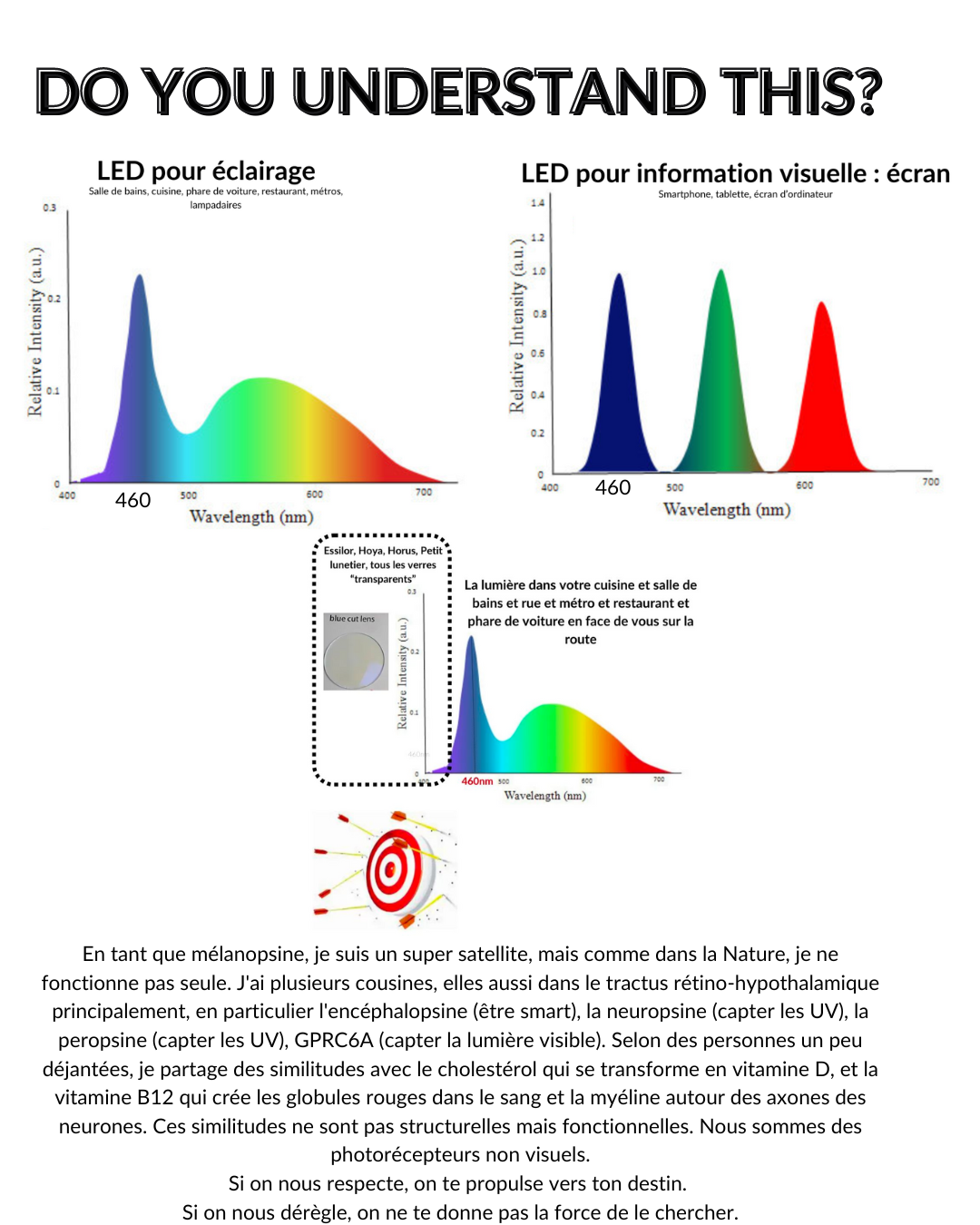
This study shows that a 15 second exposure to artificial light shifts your melatonin secretion by more than 30 minutes. Most importantly, it highlights the incredible sensitivity of the human eye and brain to even very brief light exposure.Study 6: Looking at your phone before bed would increase your body temperature.
This study associated exposure to blue light from smartphones with:- a decrease in sleep pressure (Cohen’s coefficient d = 0.49, Z = 43.50, p = 0.04)
- an increase in confusion (Cohen’s coefficient d = 0.53, Z = 39.00, p = 0.02),
- an increase in errors (Cohen’s coefficient d = -0.59, t = -2.64, p = 0.02).
- a delay in melatonin secretion of more than 50%: 2.94h vs. 2.70h
- an increase in body temperature.
Study 7: University of Basel, Department of Physics
 “We conclude that the use of [blue light blocking] glasses in male adolescents when sitting in front of a screen in the evening can attenuate melatonin suppression and alerting effects before sleep. Blue light blocking glasses therefore have the potential to acutely counteract the negative effects that modern lighting imposes in the evening on circadian physiology.”
Read this Swiss study focusing on the impact of blue light on adolescents.
“We conclude that the use of [blue light blocking] glasses in male adolescents when sitting in front of a screen in the evening can attenuate melatonin suppression and alerting effects before sleep. Blue light blocking glasses therefore have the potential to acutely counteract the negative effects that modern lighting imposes in the evening on circadian physiology.”
Read this Swiss study focusing on the impact of blue light on adolescents.
Study 8: Keio University School of Medicine, Japan
 Participants in this Japanese study wore blue light blocking glasses. The results are as follows:
- Participants improved their Pittsburgh Sleep Quality Index score (average 4.9).
- Actigraphy measurements were significantly better when the glasses were worn.

- The total duration of nighttime micro-awakenings was decreased.
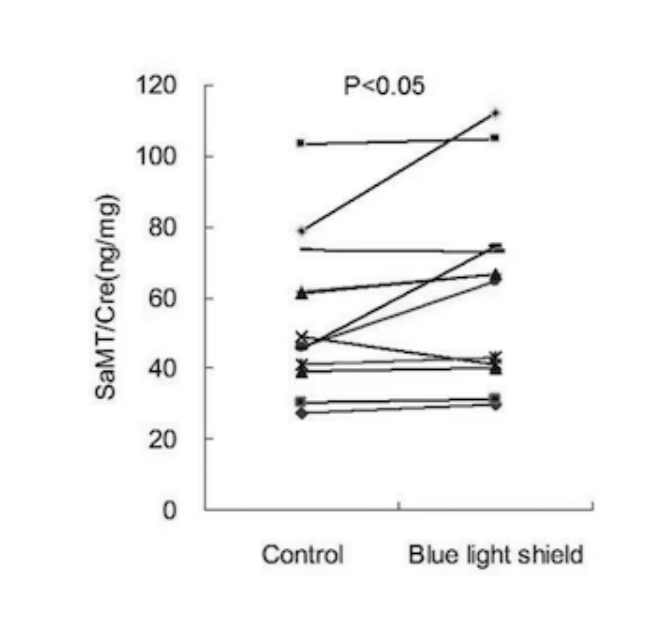
- Melatonin levels (urinary measurement adjusted for creatinine) were significantly higher after wearing blue light blocking glasses: 54.8 ng/mg ☞ 62.4 ng/ml.
 “Our results show that, according to certain sleep indices, sleep quality is significantly better in healthy adults after using screen glasses that protect them from blue light while using portable devices at night.”
Read the complete study on the protective effects of blue light blocking glasses against screens. Masahiko Ayaki, Atsuhiko Hattori, Yusuke Maruyama, Masaki Nakano, Michitaka Yoshimura, Momoko Kitazawa, Kazuno Negishi & Kazuo Tsubota (2016) Protective effect of blue-light shield eyewear for adults against light pollution from self-luminous devices used at night, Chronobiology International, 33:1, 134-139, DOI: 10.3109/07420528.2015.1119158
“Our results show that, according to certain sleep indices, sleep quality is significantly better in healthy adults after using screen glasses that protect them from blue light while using portable devices at night.”
Read the complete study on the protective effects of blue light blocking glasses against screens. Masahiko Ayaki, Atsuhiko Hattori, Yusuke Maruyama, Masaki Nakano, Michitaka Yoshimura, Momoko Kitazawa, Kazuno Negishi & Kazuo Tsubota (2016) Protective effect of blue-light shield eyewear for adults against light pollution from self-luminous devices used at night, Chronobiology International, 33:1, 134-139, DOI: 10.3109/07420528.2015.1119158
Study 9: Laval University, Departments of Ophthalmology, Rheumatology, and Immunology – Quebec
 “Our data show that, regardless of gender, blue light blocking glasses can prevent the inhibition of melatonin production caused by a light pulse (one hour at 1300 lx).”
Read the study that already showed this in 2006.
“Our data show that, regardless of gender, blue light blocking glasses can prevent the inhibition of melatonin production caused by a light pulse (one hour at 1300 lx).”
Read the study that already showed this in 2006.
 These studies are only 1/8th of the tip of the iceberg.
Deepen your knowledge about the scourge that encompasses the twenty-first century, fatigues the eyes and disrupts your circadian rhythm. To do this, you can download a list giving you access to 50 study summaries and scientific articles on the subject, as well as the ebook bringing together more than 750 studies indicating the impact of artificial blue light on our lives as natural beings.
These studies are only 1/8th of the tip of the iceberg.
Deepen your knowledge about the scourge that encompasses the twenty-first century, fatigues the eyes and disrupts your circadian rhythm. To do this, you can download a list giving you access to 50 study summaries and scientific articles on the subject, as well as the ebook bringing together more than 750 studies indicating the impact of artificial blue light on our lives as natural beings.
LITTLE LIST: A COLLECTION OF ARTICLES & STUDIES

BIG STUFF : MY RESEARCH COMPILED IN A VIRTUAL BOOK